A lot of recruiting agencies somehow discovered “AI expertise” at exactly the same time. Amazing timing.
For years, the pitch was predictable: we know the market, we have the network, we understand talent, we find unicorns. Then ChatGPT showed up, and suddenly everyone became an AI talent advisor, AI workforce strategist, or AI-enabled hiring expert.
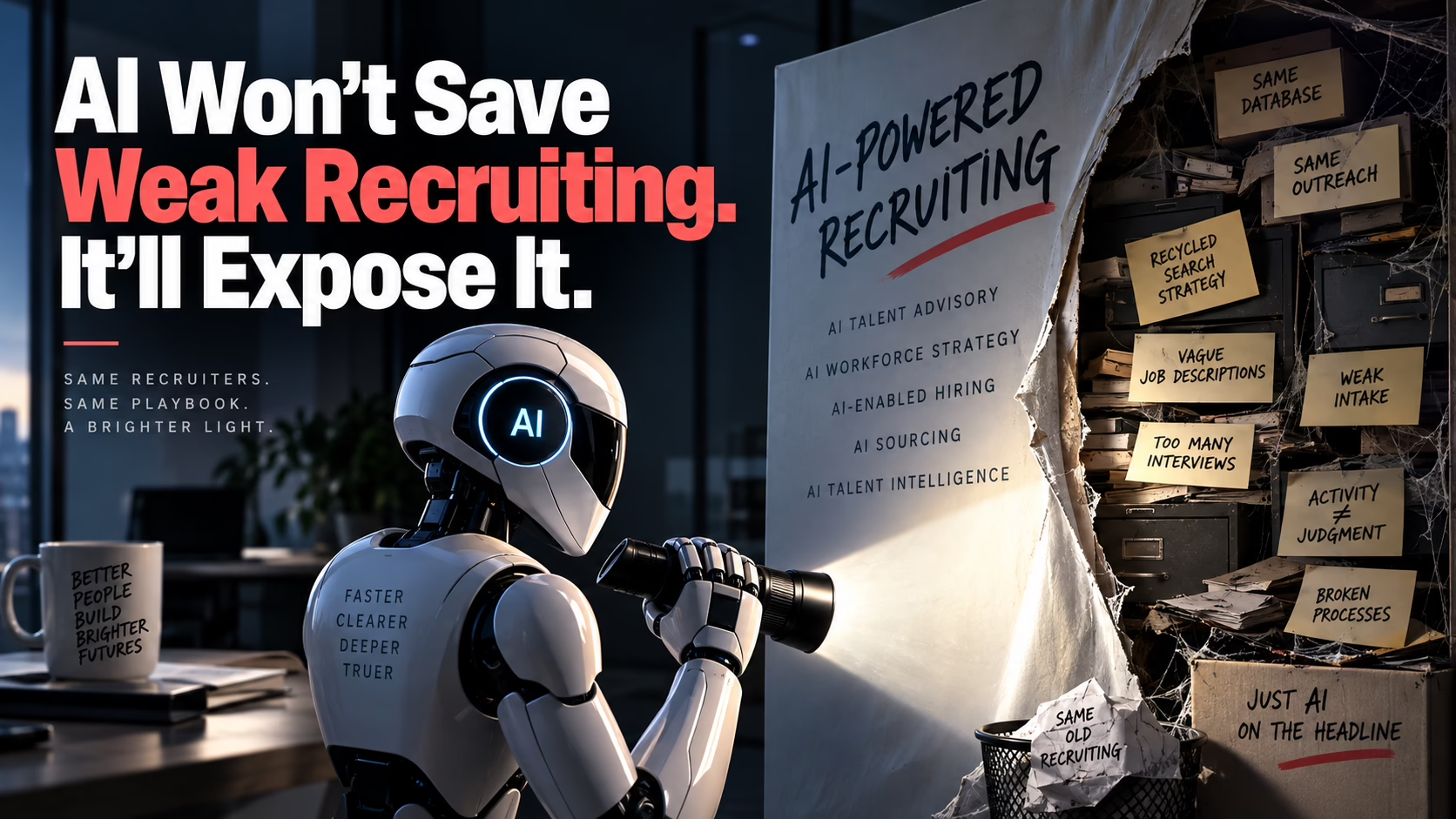
Same recruiters. Same database. Same outreach. Same recycled search strategy. Just “AI” slapped onto the LinkedIn headline like hot sauce on leftovers.
And, look, using AI is not the problem. Recruiters should use it. AI can improve research, reduce administrative work, organize information, draft outreach, identify patterns, and help teams move through the hiring process with more speed and structure.
That is useful. But useful is not the same as transformative.
Using ChatGPT to clean up a job description does not make you an AI expert. Adding “AI sourcing” to a sales deck does not make the process intelligent. Putting “AI-powered” in front of a contingency-search model does not turn old recruiting into modern talent strategy.
It just makes old recruiting sound more expensive.
The market is not short on agencies claiming they use AI. It is short on people willing to ask harder questions.
What work is actually changing? Which roles should not be backfilled? Which skills will still matter in eighteen months? What does strong performance in this role actually look like? Which interview stages are just theater? Which assessments produce real signal, and which ones only create delay?
“We added AI” is easy. Telling a client that their hiring profile is outdated is hard.
Telling a founder that the role they want does not exist at the compensation they approved is hard. Telling a hiring manager that their “must-have” list is a collection of preferences, not a business case, is hard. Telling a leadership team that they do not need another recruiter, they need better intake, clearer decision-making, and fewer people in the interview process, is hard.
The future of recruiting is not every agency pretending to be an AI company. It is not keyword matching with a chatbot attached. It is not LinkedIn scraping with better branding. It is not generic outreach written in a slightly more polished tone. And it is not activity reporting that suddenly becomes “talent intelligence” because the dashboard has more charts.
AI will make weak recruiting faster. That is not the same thing as making it better.
A weak intake meeting still produces a weak search. A vague job description still creates vague candidate criteria. A hiring manager who cannot define success will still struggle to recognize it in an interview. A broken interview process will still frustrate candidates, even if every email, reminder, scorecard, and scheduling link is automated.
A recruiter who does not understand the business will still struggle to challenge a bad brief, no matter how sophisticated the sourcing tool looks.
Technology does not eliminate the need for judgment.
It makes the absence of judgment more visible.
AI will expose shallow role intake, lazy calibration, fake expertise, activity dressed up as judgment, and companies that still treat hiring like a volume problem. It will expose agencies that call access to a database a talent strategy. And it will expose recruiters who can generate a hundred candidate profiles but cannot explain why five of them are genuinely right for the business.
That is the uncomfortable part.
When AI can perform the repeatable parts of recruiting, the human value has to become more specific, more commercial, more strategic, and more honest.
At TAM, we are not interested in using AI as a marketing adjective. We are interested in what it forces companies to confront.
Before adding another recruiter, another tool, another sourcing platform, or another layer of automation, companies should ask better questions.
Do we actually understand the role we are hiring for? Do we know which outcomes matter in the first 12 months? Are we hiring for capability, or are we copying a competitor’s job description? Have we separated the true must-haves from the nice-to-haves? Does our compensation reflect the person we say we want?
Can our hiring managers make decisions quickly and consistently? Are we measuring recruiter activity, or hiring quality? Are candidates leaving the process clearer and more engaged—or more confused and skeptical?
Those questions are not glamorous. They do not make for a great software demo.
But they determine whether AI creates leverage or simply accelerates the same old dysfunction.
The strongest organizations will use AI to remove low-value work. They will use it to help recruiters spend less time chasing logistics and more time understanding the business. They will use it to improve preparation, consistency, communication, and decision-making.
But they will not hand over the thinking.
Because the real work in Talent Acquisition is not finding more names.
It is helping a business make better talent decisions.
AI will not save weak recruiting.
It will expose it.
The question is whether your agency, your recruiting team, and your leadership team are ready to fix what it finds.